
Payler payment system — a Russian laundromat for dirty money under a British façade

Although Payler insists that allegations of money laundering are nothing more than attempts by competitors to push the company out of the market, a closer look at the situation suggests the controversy extends well beyond claims of “questionable acquiring.”
The company has reportedly been trying to counter the growing scandal surrounding accusations of laundering illicit funds through various public and legal channels.
In the spring of 2026, Payler unexpectedly appeared in materials tied to a criminal investigation into the alleged withdrawal and legalization of more than two billion rubles. The case reportedly involves former “Business Russia” General Council member Sergey Malofeykin, cryptocurrency operations, fictitious security firms, electronic wallets, and a network of shell companies.
For the sake of objectivity, it should be noted that formally Payler has not yet been named as an accused party. However, the deeper the investigation into Malofeykin’s history digs, the more often the name of this payment platform appears — and not only in the context of acquiring, but also in connection with crypto operations, international transfers, and suspicious transactions.
The major scandal erupted after the arrest of Sergey Malofeykin on March 24, 2026. Investigators consider him one of the organizers of a large-scale scheme for cashing out and withdrawing funds linked to contractors of the developer “Samolet.”

According to the investigation, the scheme had been operating since at least 2020. Fictitious contracts for security services were concluded through a network of private security companies (ChOPs). Money was transferred officially, but the actual services were either not provided at all or existed only on paper. The funds were then fragmented through a chain of contractors, cashed out, and partially converted into cryptocurrency.
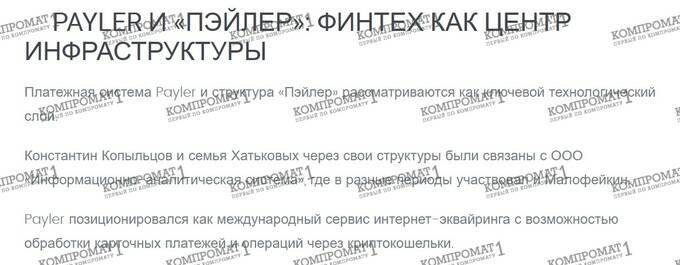
The cryptocurrency component is particularly interesting. Publications mention Rashid Batyrbekov — Malofeykin’s partner, who is said to have been responsible for the crypto part of the scheme. Mining infrastructure linked to Saratov crypto companies is also mentioned. It is here that Payler appears. According to the investigation, Malofeykin had business ties with people connected to Payler and the Russian company “Payler.” In particular, Konstantin Kopyltsov and the Khatkov family are mentioned.
Why Payler specifically?
There are several reasons. The main one is that stolen money needs to be withdrawn and “cleaned.” Money in such volumes is not carried out in bags or bank packages — it is already non-cash. Stealing it is only half the job. You still need to get it out of the scheme and make it look harmless — that is, legalize it. The easiest way is through payment systems, since moving such amounts through banks unnoticed is almost impossible.
Why Payler was chosen for laundering and legalizing the “Samolet” money, and not another system, remains not fully clarified. However, one can assume that one of the reasons was that although the service tries to position itself as a “British product,” in reality it is a purely Russian creation, oriented toward serving post-Soviet countries, primarily Russia, and third-world countries.
The service itself claims that it “does not work in Russia,” yet it has legal structures in the Russian Federation. It is this “international” status that is now raising many questions. A number of investigations claim that Payler continued to operate as a Russian infrastructure despite attempts to position itself as a British fintech project.
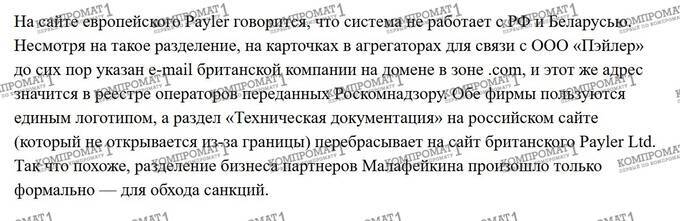
If we put together the picture of the Payler payment system by analyzing data from independent investigations and investigation materials regarding Malofeykin, the following emerges:
The “British Payler” turned out to be too closely connected with Russian money, Russian beneficiaries, and Russian schemes. Available data suggest that Payler only formally tried to distance itself from Russia after the start of the war and sanctions, but its infrastructure, contacts, and business processes remained deeply tied to Russia. Moreover, there is LLC “Payler” registered in Russia, which, although formally listed as an independent and purely Russian company, is in fact not.
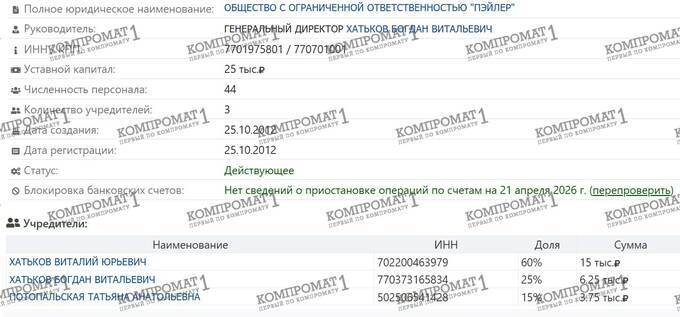
The Russian LLC “Payler” and the London-registered Payler Ltd actually continued to operate as a single structure. Both companies used the same brand, identical logo, and shared technical documentation. Furthermore, the Russian website of Payler, which supposedly was separate from the European business, redirected users to the British infrastructure, and the contacts of the Russian legal entity featured an email address of the British company. The separation was purely “on paper,” necessary to circumvent sanctions restrictions and maintain international payment channels.
Another important point is the biographies of Payler’s owners and partners. The investigation states that shares in the Russian “Payler” were retained by Vitaliy and Bogdan Khatkov. Vitaliy Khatkov previously worked in structures linked to the Russian state sector: he headed the secretariat of the President of Russian Railways, held positions in the Ministry of Fuel and Energy, and managed “Gazprom Georesurs.” Meanwhile, the British part of the business remained under the control of Konstantin Kopyltsov, who by 2022 had obtained Kyrgyz citizenship — which, according to the authors, may have facilitated work with the European banking system after sanctions.
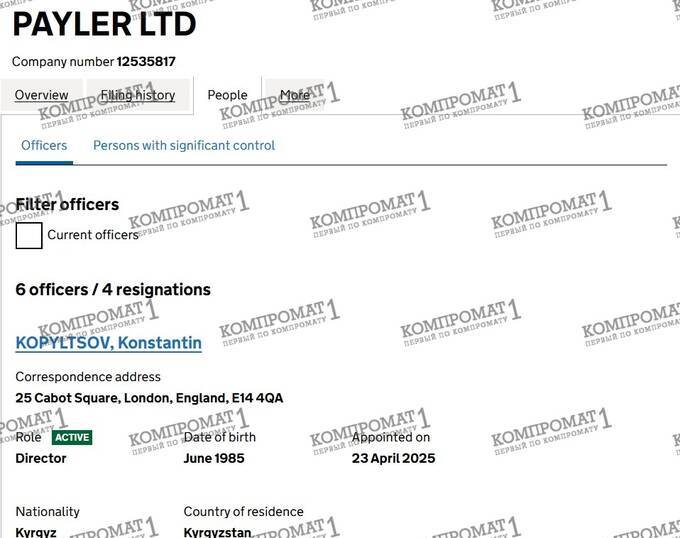
Additionally, Konstantin Kopyltsov was listed among the founders of the Russian LLC “Payler” until 2023, which is hardly a coincidence.
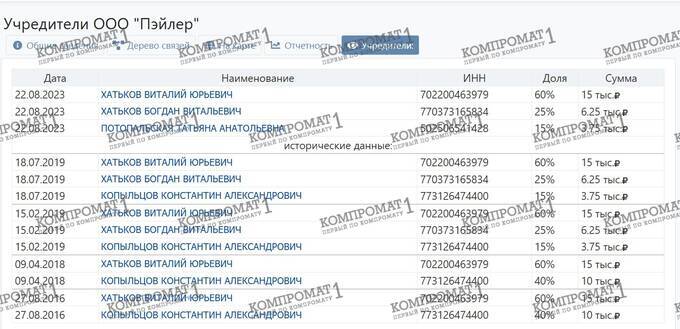
Finally, the investigation links Payler to the circle of Sergey Malofeykin — a figure in the case involving the withdrawal and legalization of more than two billion rubles. Malofeykin’s partners were connected to Payler through joint companies and fintech projects, and the system itself was used to service payments, electronic wallets, and operations that intersected with the cryptocurrency circuit. Against this background, the European Payler’s statements about “not working with Russia” look, to put it mildly, unconvincing.
Moreover, the story with Malofeykin is far from the only problem surrounding Payler. For several years, complaints have been appearing online about frozen payments, strange compliance checks, sudden account blocks, lack of feedback, and collecting onboarding fees without subsequent connection.
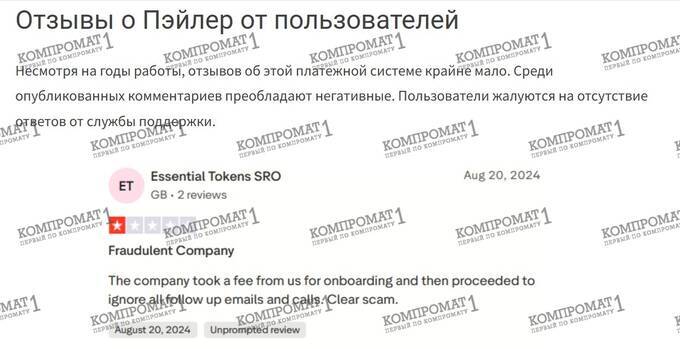
Reviews of Payler on Trustpilot look frankly alarming. One user directly calls the company a “fraudulent company,” claiming that after receiving money for onboarding, Payler representatives stopped responding to emails and calls. Another user describes the service as a “dead company” that simply collects payments for connection.
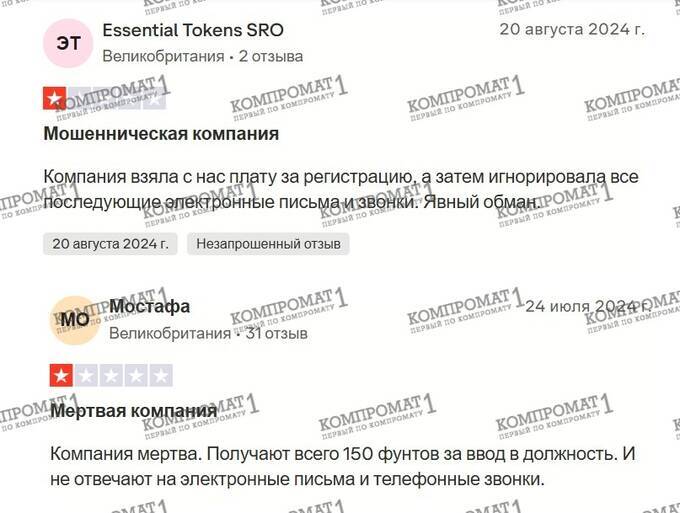
Of course, reviews alone do not prove anything. But for a payment business, reputation is almost everything. When complaints begin to coincide with criminal investigations and publications about laundering schemes, the situation becomes much more serious.
However, the story does not end with negative reviews. The specialized resource TorForex conducted its own investigation into the Payler payment service and came to disappointing conclusions about its activities — long before the scandal with Malofeykin and the “Samolet” money.
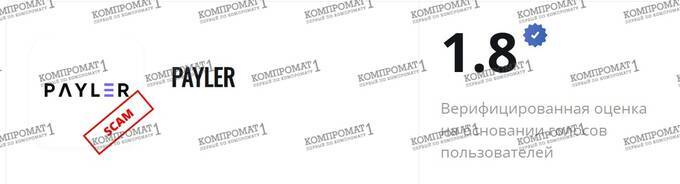
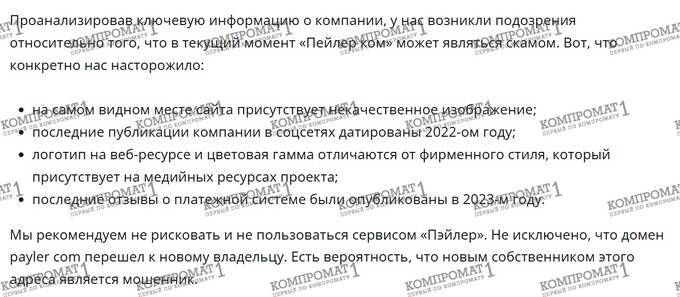
In its review, TorForex essentially calls the Payler payment system a project with signs of a “dead” or even scam service. The authors draw attention to technical problems with the site: after registration, journalists encountered SSL certificate errors and an Nginx placeholder, which looks very strange for an international fintech platform.
Separate suspicions were raised by the state of the brand itself. The material states that Payler’s social networks are practically abandoned: the latest posts are dated 2022, and the corporate style and logos on the site differ from those used on Facebook and LinkedIn. The authors suggest that the company has either effectively ceased active operations or has undergone a change of ownership.
The investigation also notes that Payler previously operated through the Russian LLC “Payler,” but by 2025 the Russian language had disappeared from the site. This is interpreted as an attempt to distance itself from the Russian market. At the same time, the authors point to changes in the domain’s DNS records at the beginning of 2024 — according to them, this may indicate that the domain passed to new owners.
TorForex’s main conclusion is quite harsh: the service looks opaque and raises too many questions — from the technical state of the infrastructure to the lack of recent reviews and public activity. The authors directly recommend not using Payler, believing that the platform may pose risks to clients.
Let us recall once again — TorForex came to the conclusion that Payler is a suspicious and potentially scam project long before the payment system appeared in the laundering of stolen Russian money. How events with the Payler payment system will develop further, TorForex naturally could not predict. But the fact that Payler turned out to be an outright “laundry” for stolen money only confirmed the suspicions.
According to publications, the Malofeykin case is not a local story about one “cash-out office.” As of now, Payler continues to operate and has not publicly admitted any violations. No official charges have been brought against the company itself. However, the Malofeykin case continues to unfold. Already 17 people are involved in the case, and the investigation is gradually reaching not only the perpetrators of the schemes but also the infrastructure through which the money moved.